The short answer
The best medication reminder for an elderly parent depends on the risk. For simple forgetting, a pill organizer, app or Alexa reminder works. For double doses, a locked dispenser such as Hero (from $29.99 a month on a 12-month prepaid plan, October 2026) is safer. Ask the pharmacy first: many offer dose packets and synced refills at no extra cost.
This guide is for older adults who juggle several medicines, and for the adult children who worry about missed or doubled doses. The one thing to know: match the tool to the actual problem. A parent who simply forgets needs a reminder. A parent who might take the same pills twice needs something that controls access, like a locked dispenser or pharmacy packaging. And before you buy anything, ask the pharmacy what it already does for free.
Start here: match the tool to the problem
| The problem | Tools that fit | Typical cost |
|---|---|---|
| Forgets now and then, sorts pills well | Weekly pill organizer, phone alarm, app, Alexa reminder | Low or free |
| Confused by many bottles | Pharmacy multi-dose packets, medication synchronization | Often no extra cost |
| May double-dose or take the wrong pills | Locked automatic dispenser | About $300 to $1,200 to buy, or a monthly subscription |
| Family lives far away and wants to know | Connected dispenser or app with missed-dose alerts | Monthly subscription, or a free app |
Whatever you choose, ask your parent's doctor or pharmacist to review the full medication list first. Fewer pills, or fewer dose times, can be the simplest fix of all.
Low-tech: pill organizers and alarms
The National Institute on Aging suggests simple habits: use meals or bedtime as cues, and try charts, calendars, weekly pill boxes, timers or reminder apps. It also warns against skipping or halving doses to save money, and against taking medicine in the dark.
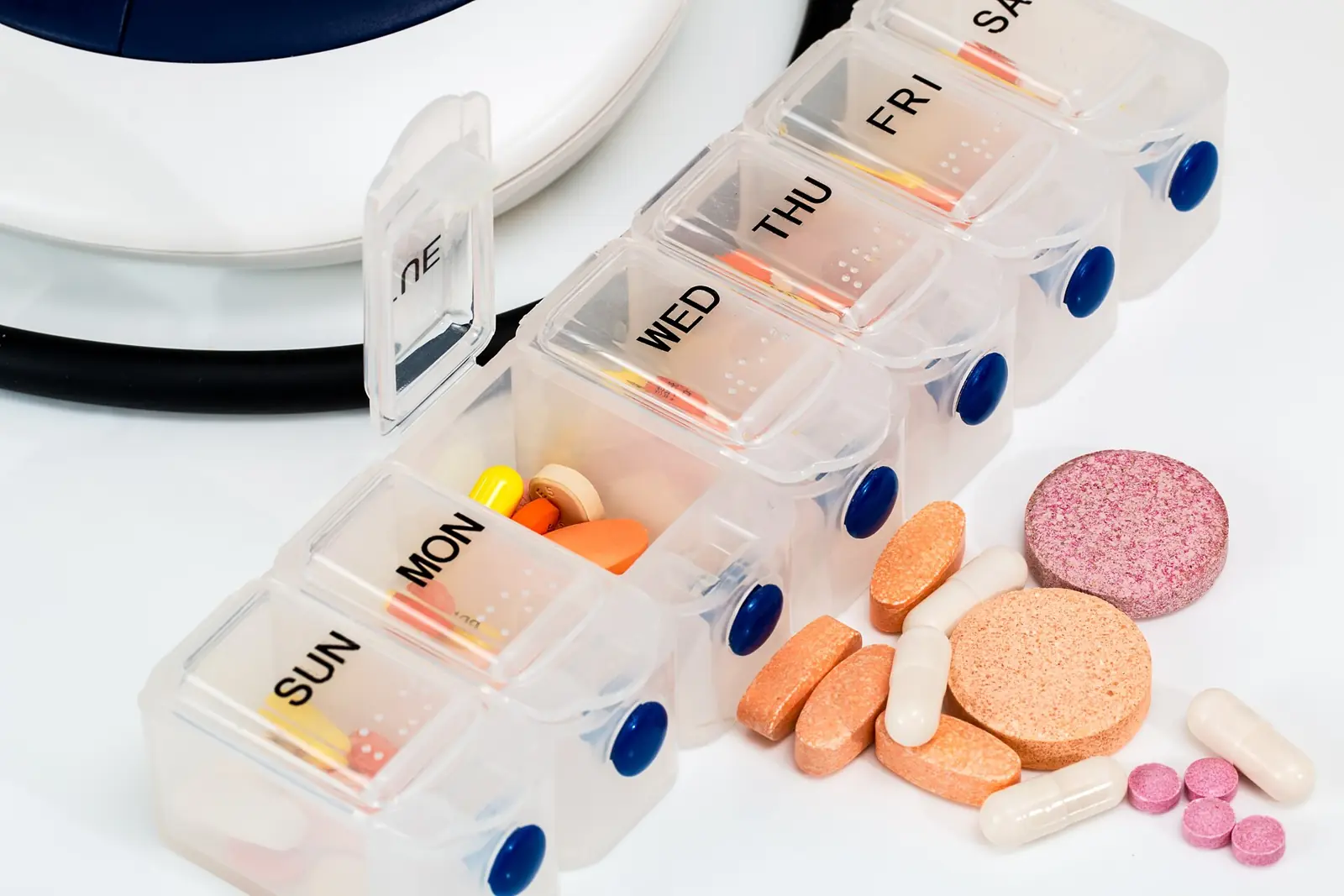
A weekly pill organizer with morning, noon, evening and bedtime rows is the cheapest place to start. Some organizers come with built-in alarms. For example, e-pill, a medication reminder retailer, listed large 7-day organizers with several compartments per day from $34.95 in October 2026. Simple ones cost less at most drugstores.
The weak spots: someone has to fill the box correctly every week, nothing stops a second dose, and an alarm on a phone in another room does not help. Organizers work best for a parent who is still sharp but busy or forgetful.
Medication reminder apps
If your parent uses a smartphone comfortably, an app can be a good free step. Medisafe is one of the best known. Its site lists dose and refill reminders, drug interaction warnings, appointment reminders and family tracking, which lets a family member see when a dose is missed. The app is free to download.
Apps have limits for many older adults: small text, notifications that get dismissed by accident, and phones that are left uncharged. They work best for the "younger old" who already live on their phones, or as a backup for a family caregiver tracking things from afar.
Voice reminders with Alexa
A smart speaker or display can announce reminders out loud at set times: "Mom, it's 8 o'clock, time for your morning pills." Family members who manage the account can add or change reminders from their own phone. For a parent who will not use an app, this is often the easiest step up from a kitchen timer.
A voice reminder still cannot confirm a dose was taken or stop a double dose. Our guide to Alexa for elderly parents covers setup and limits. Some AI companion devices also give spoken medicine reminders; see AI companions for seniors.
Locked automatic pill dispensers
Automatic dispensers hold several days or weeks of pills, alert your parent when a dose is due, and release only that dose. Locked models keep the rest out of reach, which matters for a parent with memory loss who might take extra pills. Connected models also alert family when a dose is missed.
Prices below come from each company's own website in October 2026.
| Dispenser | How you pay | Price (Oct 2026) | Notes |
|---|---|---|---|
| Hero | Subscription (device is leased) | $29.99 to $59.99/mo depending on plan (see below) | Holds up to a 90-day supply of 10 medications; app; passcodes and dose limits |
| MedMinder | Service plan | Not listed on its site; call for a quote | Optional locked unit; can pair with MedMinder's own pharmacy, which sends pre-filled trays monthly |
| LiviPod | One-time purchase | Starter set from $293 | No subscription; one pod per pill type, up to 10 pods; locking base station available; Wi-Fi or Bluetooth |
| e-pill (MedSmart, MedTime and others) | One-time purchase | $295.95 to $1,189.95 | Locked and tamper-resistant models; no subscription listed |
Hero
Hero is a countertop dispenser about the size of a coffee maker. It alerts your parent at dose time, and one button press releases the right pills. Family members can get alerts through the app, and Hero offers passcodes, maximum dose limits and low-pill alerts.
Hero's prices are hard to pin down, even on its own site. In October 2026, the pricing page's banner said "Starting at $39.99/mo with prepaid plans or pay monthly at $59.99/mo." The same page's FAQ said a 12-month prepaid plan starts at $29.99 a month, a monthly payment plan is $44.99 a month with a 12-month commitment, and a no-commitment plan is $59.99 a month. Confirm the exact plan and total at checkout.
MedMinder
MedMinder is a pill box with lit compartments that beeps at dose time, and can call, text or email your parent and family. Its FAQ says a locked unit with online monitoring is optional, and that the lights, beeps and locks keep working without a signal as long as the device has power. MedMinder also runs a pharmacy that refills trays monthly. We could not find a current price on MedMinder's site, so ask for written pricing and contract terms before you sign up.
LiviPod
LiviPod, from the company behind the earlier Livi dispenser, takes a different approach: each small pod holds one type of pill. At dose time the pod lights up and sends an alert to the phone, and one tap releases the dose. The schedule is set in a free smartphone app. It costs from $293 for a starter set, with no subscription and a 30-day money-back guarantee, according to its site in October 2026. It does not handle split pills, liquids or gummies, and the full locking drawer requires the separate base station.
e-pill
e-pill sells locked automatic dispensers outright. In October 2026, its prices ran from $295.95 (MedSmart Voice) to $1,189.95 (CompuMed Safe). There is no monthly fee listed for the devices. These are simpler machines than Hero: someone fills them, and they alarm at dose time while keeping other doses locked away.
Hero's commitment terms: read before you sign
With subscription dispensers, the contract matters more than the monthly price. Hero's returns and cancellation policy (effective April 27, 2026) is a good example of what to look for:
- The trial starts at activation. You get at least 30 days from the activation date. Cancel and return the dispenser in that window for a refund of subscription fees; shipping and anything marked non-refundable at checkout is not refunded.
- Annual plans lock you in. An annual plan billed monthly has a 12-month commitment. If you keep the device after the trial, you are responsible for the rest of that commitment.
- Annual plans renew with a new commitment. When the term ends, annual plans renew automatically at the annual billed-monthly rate with a new 12-month commitment, unless your order says otherwise.
- You must send the device back. When the subscription ends, you have 30 days to return the dispenser (and any hotspot). If you do not, Hero charges a non-returned dispenser fee. The policy page did not list the amount.
Before you click "join": write down the plan name, the total you will pay in 12 months, the cancellation date for the trial, and what happens at renewal. Set a calendar reminder a month before renewal. If your parent moves to assisted living or a nursing home, these terms still apply.
Free help from the pharmacy
Many families skip this step and buy a gadget they did not need.
Multi-dose packaging. Many pharmacies can sort pills into packets or blister cards labeled by date and time. PillPack from Amazon Pharmacy sorts medications into dated packets and mails them "for no extra cost," according to its page in October 2026. You need two or more eligible prescriptions, and it accepts Medicare, depending on state rules on automatic refills. Local independent and chain pharmacies often offer blister packs too. Ask whether there is a fee.
Medication synchronization. "Med sync" lines up refills so everything is ready on one day each month, often with a call from the pharmacist first. In a 2013 study in the Journal of the American Pharmacists Association, patients in a rural pharmacy med sync program had 3.4 to 6.1 times greater odds of taking their chronic medicines as prescribed than matched patients. It was not a randomized trial, and it was funded by a drug maker, but the idea is simple and usually free to ask about.
A free medication review. Medicare.gov says plans with Medicare drug coverage must offer Medication Therapy Management to people who meet certain requirements, at no cost. It usually includes a review of all medicines with a pharmacist or provider and a written summary. If your parent takes drugs for more than one chronic condition, call the drug plan and ask whether they qualify.
A good first call: phone your parent's pharmacy and ask three questions. Can you sync all refills to one day? Can you package pills by dose time? Does my parent qualify for a medication review? Then decide whether a device is still needed.
Does Medicare pay for pill dispensers?
The answer depends on whether your parent has Original Medicare (Parts A and B), Medigap, a Medicare Advantage (Part C) plan or Medicaid, and Medicare Advantage extra benefits vary by plan. We explain the details in Does Medicare cover pill dispensers? To check your parent's plan, read its Evidence of Coverage, call the plan, call 1-800-MEDICARE, or get free help from your local SHIP at shiphelp.org.
Be wary of anyone who calls or knocks offering a "free pill dispenser from Medicare." Medicare's fraud page says Medicare will never call to sell you anything or visit you at home. Never give a Medicare number to an unexpected caller.
Memory loss and medicines
For a parent with dementia, a reminder alone is rarely enough. Locked dispensers prevent extra doses but still need someone to load them correctly and refill on time, and some people with dementia struggle with the button even when the alarm sounds. At some point, a person may need to hand each dose to them. If you are weighing how much help your parent needs, our can my parent live alone checklist covers medicines along with other daily tasks. A large dementia clock that shows morning, afternoon and evening can also help a parent know which dose is due.
How we chose
We have not tested these dispensers or apps hands-on. We compared published features, prices, subscription and contract terms, and return policies on each company's own website in October 2026, along with guidance from the National Institute on Aging and Medicare.gov and the available research on medication synchronization. We focused on what matters most to older adults and their families: preventing missed and double doses, ease of use, total cost and what happens when you cancel.
Common questions
What is the best medication reminder for elderly parents?
It depends on the problem. A pill organizer, app or voice reminder suits simple forgetting; a locked automatic dispenser suits a parent at risk of taking extra doses; pharmacy packets suit a parent confused by many bottles.
How much does the Hero pill dispenser cost?
In October 2026, Hero's site listed plans from $29.99 a month on a 12-month prepaid plan to $59.99 a month with no commitment, and its banner also showed $39.99 prepaid. Confirm the plan and total at checkout.
Can I cancel Hero anytime?
Only on the no-commitment monthly plan. Annual plans carry a 12-month commitment and renew with a new 12-month commitment, and you must return the dispenser within 30 days after the subscription ends or pay a fee.
Are there pill dispensers with no subscription?
Yes. LiviPod (from $293) and e-pill's locked dispensers ($295.95 to $1,189.95) are one-time purchases, according to their sites in October 2026.
Do pharmacies sort pills for free?
Many do. PillPack from Amazon Pharmacy says it packages pills by dose at no extra cost, and many local pharmacies offer blister packs and refill synchronization. Ask your parent's pharmacy whether there is a fee.
Does Medicare cover automatic pill dispensers?
Coverage is limited and depends on the plan. See our guide to whether Medicare covers pill dispensers, and check your parent's plan documents or call the plan.
Sources
We checked these sources on October 31, 2026.
- National Institute on Aging: Taking Medicines Safely as You Age
- Hero Health: Pricing and FAQ
- Hero Health: Limited Warranty, Returns and Cancellation Policy
- MedMinder: Home page
- MedMinder: FAQ
- LiviPod: Smart automatic pill dispenser
- e-pill: Locked automatic pill dispensers
- Medisafe: Medication reminder app
- Amazon Pharmacy: PillPack
- Holdford and Inocencio: Adherence and persistence associated with an appointment-based medication synchronization program (JAPhA, 2013)
- Medicare.gov: Safety checks, drug management programs, and Medication Therapy Management
- Medicare.gov: Reporting Medicare fraud and abuse
This guide is general information, not medical, legal or financial advice. Medicare Senior is independent and is not affiliated with Medicare or any government agency. No company paid to be mentioned here.